Ramayana Pilgrimage
Rama Setu to Ashok Vatika Yatra
11 Days / 10 Nights Package
11 Days / 10 Nights Package
This carefully designed private Ramayana Yatra is ideal for devotees, couples and families seeking a deeper spiritual journey through Sri Lanka.
Most conventional Ramayana tours concentrate only on well-known locations around Nuwara Eliya, Ella, Chilaw and Colombo. Our journey goes beyond the standard route. In addition to celebrated pilgrimage sites such as Sita Amman Temple, Ashok Vatika, Divurumpola, Munneswaram and Manavari, we explore rarely visited places in northern, eastern and central Sri Lanka.
These include the traditional landing place of Ravana’s Pushpaka Vimana, Sita’s first place of confinement, Ravana’s legendary aircraft workshop, the mountain where his body was reportedly laid after the battle, the lake from which Rama is believed to have released his final arrow, and viewpoints overlooking Rama Setu.
This tour follows traditions preserved by temples, Hindu devotees, local communities and Sri Lanka’s Ramayana tourism heritage. Some associations belong to living religious tradition and folklore rather than archaeologically proven history. Presenting them clearly allows travellers to appreciate both their spiritual significance and their historical setting. Many of the lesser-known locations also appear in the Ramayana Yatra material published by the Sri Lanka Tourism Development Authority.
Exclusions: international flights, visa or ETA fees, entrance tickets, personal expenses and tips. All of it is spelled out in your written quote.
A starting point, not a fixed departure. Add nights, swap a stop or change the pace and we'll rebuild it around you.
Arrive at Jaffna International Airport, where you will be welcomed by your private chauffeur-guide. Begin the pilgrimage by exploring the sacred Hindu heritage of the Jaffna Peninsula.
Visit Naguleswaram Temple at Keerimalai, one of Sri Lanka’s ancient Pancha Ishwarams—the five historic coastal temples dedicated to Lord Shiva.
Although Naguleswaram is not connected to one specific episode in the Valmiki Ramayana, its antiquity, Shiva worship and northern location give it great importance within the wider spiritual landscape associated with ancient Lanka. It is traditionally connected with Sage Nagula Muni, who is believed to have recovered from an affliction after bathing in the nearby sacred spring and worshipping Lord Shiva.
Situated only a short distance from the sea, the Keerimalai springs contain fresh water despite their coastal location. Pilgrims have bathed here for centuries before offering prayers at Naguleswaram.
The springs are associated with purification, healing and ancestral rites. According to local tradition, Sage Nagula Muni bathed here and regained his former appearance. Separate bathing areas are normally available for men and women.
Continue to this ancient temple dedicated to Lord Murugan, the son of Lord Shiva and Goddess Parvati.
Temple tradition relates that Princess Maruthapuraveegavalli suffered from a facial deformity and was cured after bathing at Keerimalai and worshipping Lord Murugan here. She is then believed to have established or restored the temple in gratitude. While not linked to a particular Ramayana event, the shrine adds an important dimension to the sacred Hindu heritage of northern Sri Lanka.
Visit Nilavarai, a mysterious natural freshwater well traditionally regarded as exceptionally deep.
One local Ramayana tradition says that Rama, whose army required water during its campaign in Lanka, released an arrow into the earth and caused water to rise from below. Other local accounts connect the well with Ravana and his advanced water-management system. The continuing supply of fresh water has helped preserve Nilavarai’s sacred and legendary reputation.
Transfer to Jaffna and check in at the hotel.
Overnight stay in Jaffna
After breakfast, continue through the spiritual heart of northern Sri Lanka.
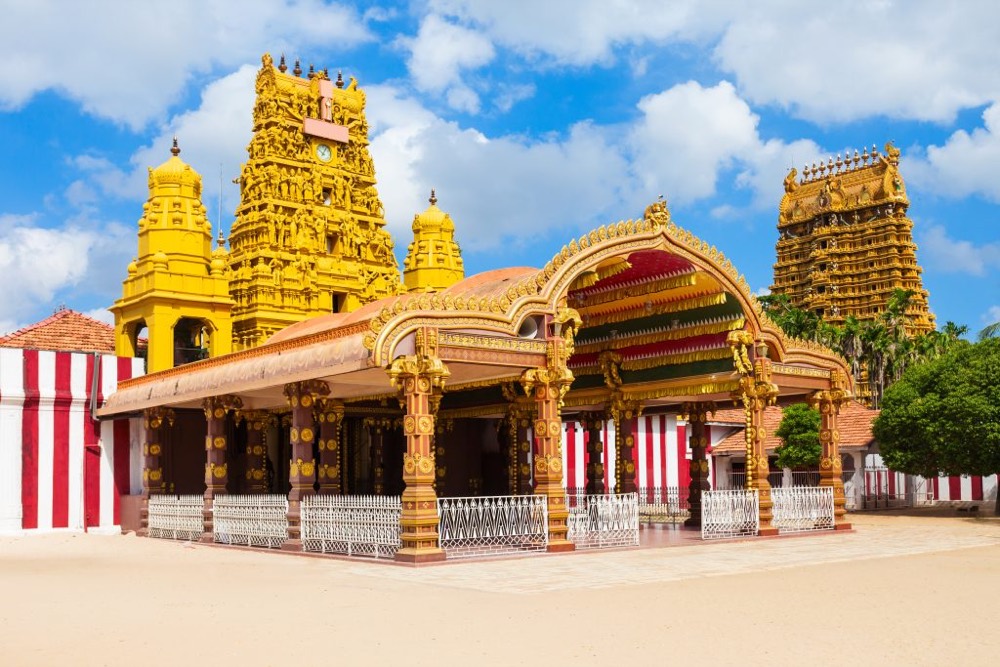
Visit Jaffna’s most celebrated Hindu temple, dedicated to Lord Murugan.
Nallur does not represent a particular event in the Ramayana, but it is one of Sri Lanka’s most important centres of Hindu worship. Its golden gopuram, sacred courtyards, daily rituals and annual festival offer pilgrims an opportunity to experience the living Tamil Hindu traditions of the island.
Men are generally expected to remove shirts before entering the innermost worship areas, while all visitors should dress modestly.
Continue to Vallipuram Alvar Temple, an ancient shrine dedicated to Lord Vishnu.
The temple has special relevance to the wider Ramayana pilgrimage because Lord Rama is revered as an incarnation of Lord Vishnu. Rather than being presented as the location of a specific Ramayana episode, Vallipuram should be understood as an important place of Vaishnavite worship and devotion to the divine tradition represented by Rama.
Travel by road and local passenger boat to Nainativu, one of the most sacred islands off the Jaffna Peninsula.
Visit the magnificent Nagapooshani Amman Temple, dedicated to Goddess Parvati in the form of Nagapooshani.
The island is revered by devotees as a Shakti Peetha—a place sanctified by the divine energy of Goddess Shakti. Traditions vary regarding the precise list and location of the Shakti Peethas, but Nainativu remains one of Sri Lanka’s most important centres of Shakti worship.
This is not the setting of a direct Ramayana incident. Its inclusion enriches the pilgrimage by representing the worship of the Divine Mother within the sacred geography of Lanka.
After returning to the mainland, continue to Mannar.
Arrive at Talaimannar in time to enjoy the sunset from the historic pier and coastline.
Beyond this shore lies the chain of shallow limestone shoals extending between Sri Lanka and India, popularly known as Rama Setu or Adam’s Bridge. According to the Ramayana, Nala and the Vanara army constructed the bridge across the sea, allowing Rama’s forces to enter Lanka and rescue Sita.
The complete formation cannot be viewed from the pier, but standing at the northwestern edge of Sri Lanka provides a powerful geographical connection with the legendary crossing.
Overnight stay in Mannar
An early departure is recommended, as this is one of the longest travelling days of the tour.
Visit Thiruketheeswaram, another of Sri Lanka’s ancient Pancha Ishwarams.
The temple stands near the historic port of Manthai, once an important maritime centre linking Sri Lanka with South India and the wider Indian Ocean. It is traditionally associated with ancient worship of Lord Shiva by sages, kings and celestial beings.
Some Ramayana traditions connect Rama’s post-war acts of worship and purification with Sri Lanka’s great Shiva temples. However, the best-known specific traditions concerning Rama’s worship after defeating Ravana are associated with Munneswaram and Manavari. Thiruketheeswaram is included primarily for its profound antiquity and spiritual importance.
Continue across northern Sri Lanka to Trincomalee.
Standing dramatically on Swami Rock above the Indian Ocean, Thirukoneswaram is one of Sri Lanka’s most revered Shiva temples and another of the Pancha Ishwarams.
According to local tradition, Ravana was an ardent devotee of Lord Shiva and worshipped at Koneswaram. One legend relates that Ravana attempted to lift or move the sacred mountain after his mother was unable to visit the temple. Lord Shiva subdued Ravana, who then offered hymns of devotion and received divine blessings.
Within the Koneswaram complex is a shrine associated with Goddess Shankari Devi. It is revered by many pilgrims as one of the eighteen principal Shakti Peethas described in certain Hindu traditions.
Its position beside the ancient Shiva shrine brings Shiva and Shakti worship together in one of the most spectacular sacred settings in Sri Lanka.
Walk to the viewpoints of Swami Rock, overlooking the deep blue waters of Trincomalee Bay.
A dramatic cleft in the rock is traditionally known as Ravana Cleft or Lover’s Leap. Local legends connect the rocky promontory with Ravana’s devotion to Shiva and the ancient kingdom of Lanka.
Visit the seven shallow hot wells at Kanniya, where the water in neighbouring wells may have slightly different temperatures.
According to one local tradition, Ravana created the wells by striking the ground so that water would be available for the funeral rites of his mother. The site continues to possess religious and archaeological importance, although the Ravana association belongs to local tradition rather than verified history.
Continue to Sigiriya and check in at the hotel.
Overnight stay in Sigiriya
After breakfast, visit Sigiriya before travelling into one of the most remote and rarely explored sections of the Ramayana journey.
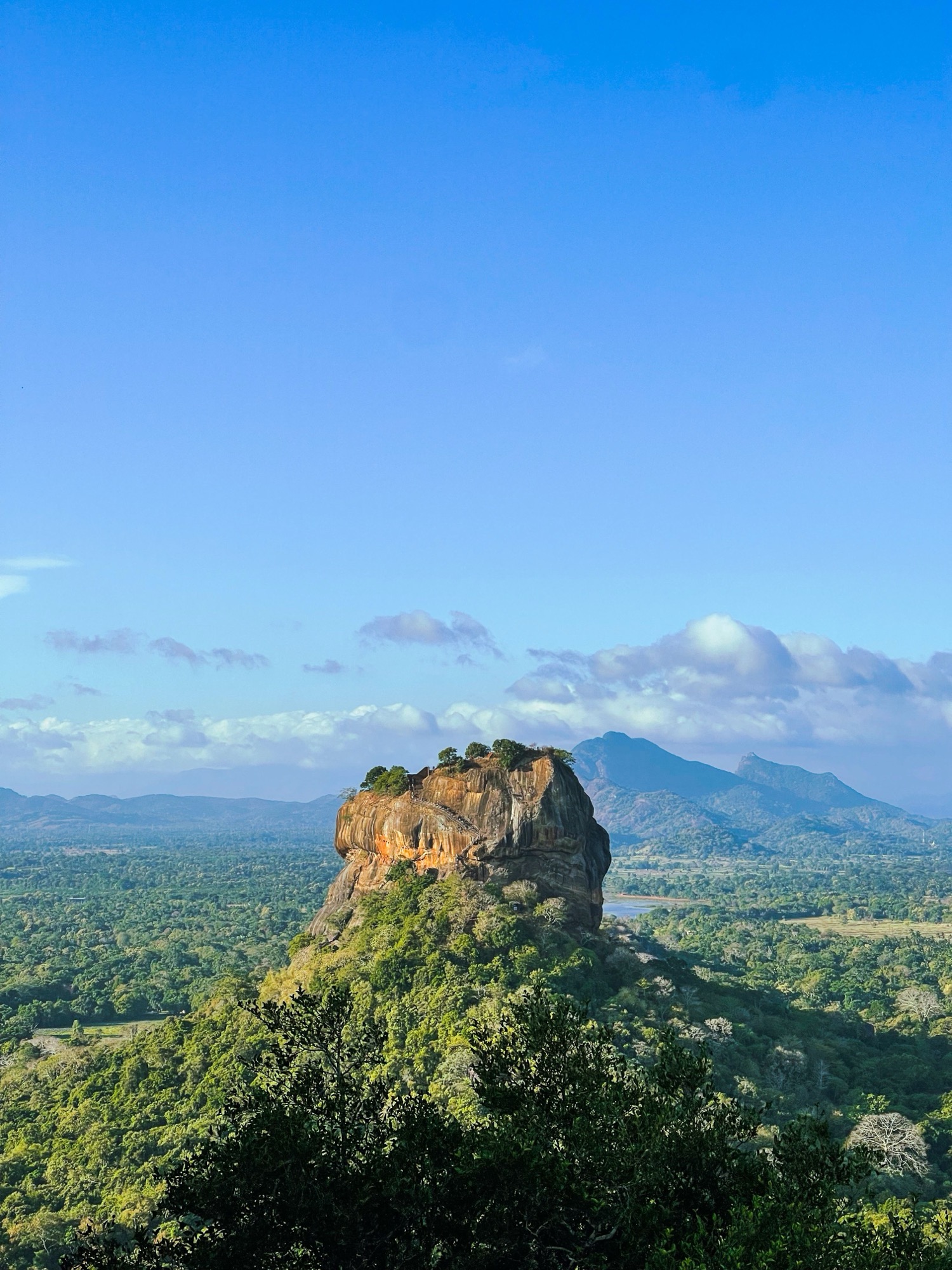
Climb the magnificent Sigiriya Rock Fortress, a UNESCO World Heritage Site celebrated for its ancient water gardens, frescoes, Mirror Wall, Lion Staircase and extraordinary summit palace.
The surviving fortress was constructed by King Kashyapa in the fifth century CE, many centuries after the traditional period assigned to the Ramayana. Nevertheless, some modern local traditions associate the wider Sigiriya region and its caves with Ravana’s ancient kingdom.
The established archaeological history and the later Ramayana traditions should therefore be presented separately. Even without a proven Ramayana connection, Sigiriya remains one of Sri Lanka’s greatest cultural landmarks.
Continue towards Wasgamuwa through the dramatic landscapes bordering the Knuckles Mountain Range. Weather permitting, observe Lakegala from selected roadside viewpoints.
The sharp, distinctive summit of Lakegala dominates the surrounding landscape. Local traditions identify it as one of Ravana’s observation points or watch mountains.
Its strategic position would have provided extensive views over the central plains and surrounding valleys. The mountain is also associated in folklore with Ravana’s kingdom, astronomical observations and communication between important locations.
This itinerary includes a distant view rather than a climb, as reaching the summit requires a separate technical hiking arrangement.
Visit the tranquil Dunuwila area. Its name is commonly interpreted through the Sinhala words dunu, meaning bow, and wila, meaning lake or reservoir.
According to regional Ramayana tradition, Rama stood near this water body and released the powerful Brahmastra that struck Ravana during the final battle. The landscape is rarely included in standard Ramayana tours and offers an opportunity to hear the story in the setting where local communities have preserved it.
Continue to Yudaganawa, whose name evokes a field or arena of war. The surrounding region is traditionally associated with the final conflict between Rama’s army and Ravana’s forces.
It is important to describe Yudaganawa as a place of local Ramayana tradition rather than an archaeologically confirmed battlefield.
In the late afternoon, enjoy a jeep safari in Wasgamuwa National Park. The national park itself is not a recognised archaeological battlefield; rather, it protects the wider wilderness landscape associated by local tradition with the final stages of the war.
Today, Wasgamuwa is known for wild elephants, buffalo, deer, crocodiles, monkeys and rich birdlife. The safari adds an outstanding nature experience to the pilgrimage.
Overnight stay near Wasgamuwa
After an early breakfast, travel through one of the most fascinating but least-visited Ramayana regions in Sri Lanka.
Access to some sites involves rural roads and short walks. The programme may need adjustment depending on weather, road conditions and the mobility of the travellers.
View Yahangala, a striking flat-topped rock formation whose name means “Bed Rock.”
According to local legend, after Ravana fell in battle, his body was brought to this rock and laid upon it so that his subjects could pay their final respects. Some traditions further claim that the body was later hidden or preserved within the surrounding mountain region.
Yahangala lies in rugged terrain, so this itinerary provides a suitable distant viewpoint. A closer hike requires additional time, experienced local guidance and favourable weather.
Continue to Weragantota, traditionally interpreted as “the place where the aircraft landed.”
Sri Lankan Ramayana tradition identifies it as the place where Ravana’s Pushpaka Vimana first landed after bringing Sita to Lanka. It is therefore regarded as the beginning of Sita’s geographical journey through the island.
There is no surviving ancient runway or archaeological evidence of aircraft. Its significance rests on place-name traditions and the stories preserved by local communities.
Visit the remote archaeological setting known as Sita Kotuwa, meaning “Sita’s Fortress.”
According to local tradition, the area was once connected with Queen Mandodari’s palace and was the first location where Sita was accommodated after arriving in Lanka. She was reportedly moved from here to Ashok Vatika after refusing Ravana’s advances.
The visible ruins belong to a later historic period and have been interpreted archaeologically as a forest-monastery complex. The site nevertheless remains important to the Ramayana Trail because of its traditional name, landscape and association with Sita’s captivity.
Visit or observe the Gurulupotha area, traditionally connected with Ravana’s flying vehicle.
The name is interpreted in Ramayana tourism traditions as a place associated with bird-like parts. Ravana’s Pushpaka Vimana—known in Sri Lankan folklore as the Dandu Monara, or wooden peacock—is said to have been maintained or repaired here.
No archaeological evidence currently proves that the site was an ancient aircraft workshop, so it is best presented as an intriguing element of Sri Lankan Ravana folklore.
Continue through the hill country to Ella.
Overnight stay in Ella
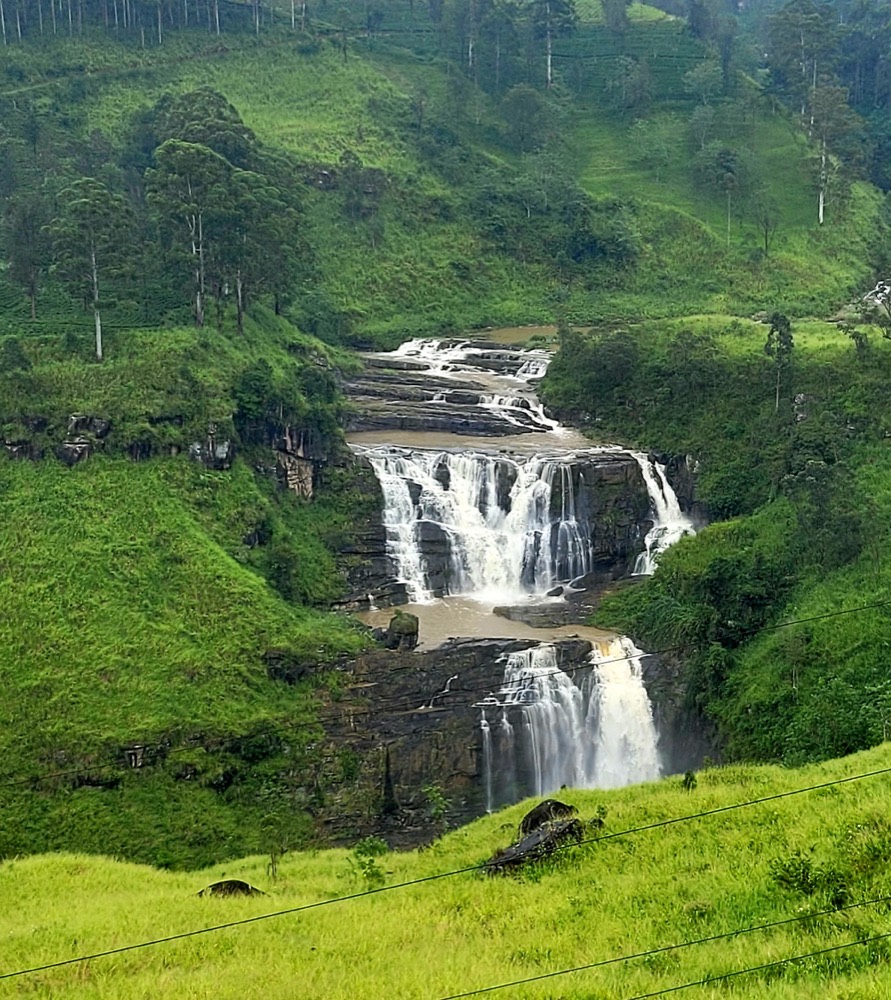
After breakfast, explore locations associated with Ravana and Sita around Ella.
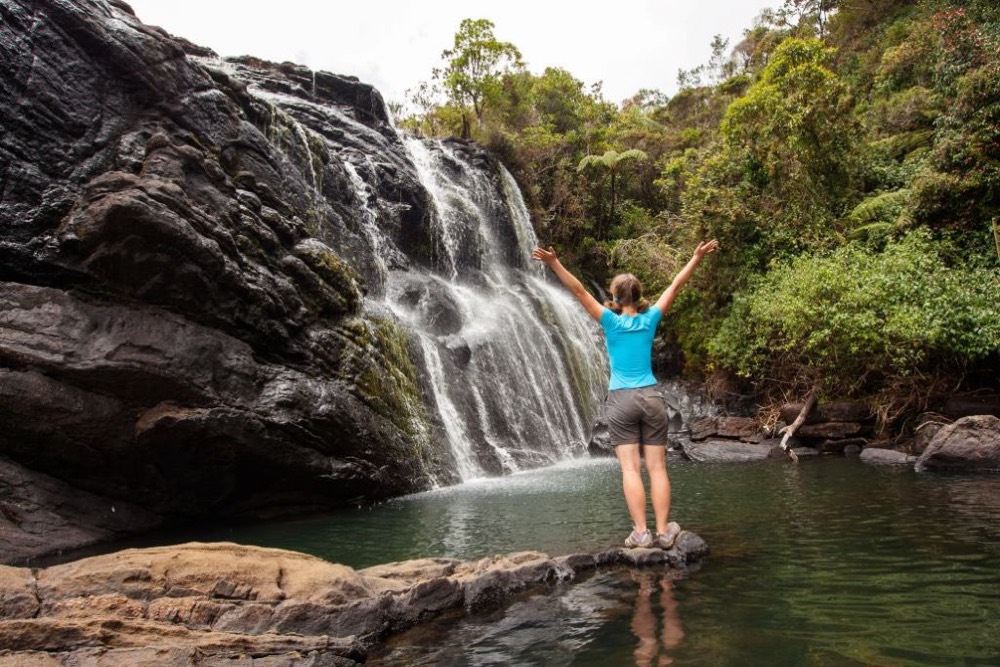
Visit the impressive Ravana Falls, which descends beside the mountain road outside Ella.
According to local tradition, the waterfall and nearby caves formed part of Ravana’s mountain territory. Sita is sometimes believed to have bathed in pools or streams in this area while being moved between places of confinement.
The waterfall is especially powerful during the rainy season. Visitors should remain within the designated viewing area because the rocks can be extremely slippery.
Visit the ancient cave temple before continuing, if conditions permit, towards Ravana Cave.
Local tradition says that the cave was one of the places where Sita was temporarily hidden. It is also believed to have formed part of an extensive network of tunnels connecting Ravana’s important palaces, fortresses and transportation routes.
The Ramayana connection remains legendary, while the cave and temple also hold later archaeological and Buddhist religious importance. Reaching the cave requires climbing many uneven steps and is optional for travellers with limited mobility.
Continue towards Nuwara Eliya and visit Divurumpola, traditionally regarded as the place of Sita’s Agni Pariksha.
After Ravana’s defeat and Sita’s rescue, she is believed to have entered the sacred fire to demonstrate her purity. Agni, the fire deity, returned her unharmed, confirming her innocence.
The name Divurumpola means “the place of an oath.” Even today, local people regard the location as a place where solemn promises and oaths carry special significance.
Arrive in Nuwara Eliya and relax during the evening.
Overnight stay in Nuwara Eliya
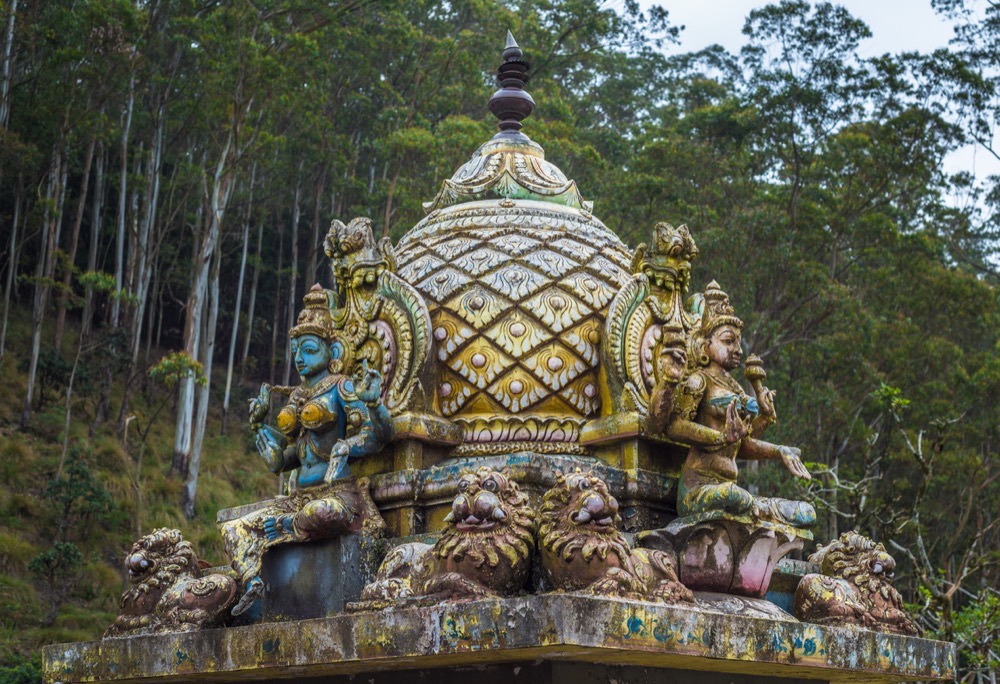
After breakfast, explore Sri Lanka’s best-known group of Ramayana pilgrimage sites.
Visit Sita Amman Temple at Sita Eliya, one of the most important Ramayana shrines in Sri Lanka.
The temple stands beside a mountain stream in an area traditionally identified with Sita’s captivity. Devotees believe that Sita bathed in the stream and prayed here while awaiting Rama’s arrival.
On the rock beside the water are large depressions that pilgrims traditionally identify as Hanuman’s footprints. The temple contains images of Rama, Sita, Lakshmana and Hanuman, making it a central place of worship during the Yatra.
Continue to Hakgala, traditionally identified with Ashok Vatika, the beautiful garden where Sita was kept under the watch of Ravana’s attendants.
According to the Ramayana, Hanuman found Sita seated beneath a tree in this garden. He presented Rama’s ring as proof that he had come as Rama’s messenger. Sita then gave Hanuman an ornament to carry back to Rama.
Hakgala is now a botanical garden known for its cool climate, mountain scenery and collections of roses, orchids, ferns and other plants. Entrance can be included for travellers who wish to explore the gardens, while those focused entirely on pilgrimage may visit the surrounding Ramayana locations.
Visit Gayathri Peedam in Nuwara Eliya, a modern Hindu spiritual centre dedicated to Goddess Gayathri.
The shrine is associated in Sri Lankan tradition with Ravana’s devotion, meditation and knowledge of sacred sciences. It is also known for the Sri Lankatheeswarar Shiva Lingam and for religious observances conducted by visiting devotees.
It should be described as a contemporary pilgrimage shrine preserving Ravana-related spiritual traditions, rather than an ancient structure surviving from the Ramayana period.
Travel through the tea-covered mountains to Ramboda and visit the Shri Bhakta Hanuman Temple established by the Chinmaya Mission.
The surrounding region is traditionally associated with Hanuman’s search for Sita. The temple’s commanding Hanuman image symbolises devotion, courage, strength and absolute service to Lord Rama.
Local tradition associates nearby hills with the movements of Hanuman’s forces. The temple’s elevated position also provides beautiful views across the Ramboda valley and tea estates.
Continue to Kandy.
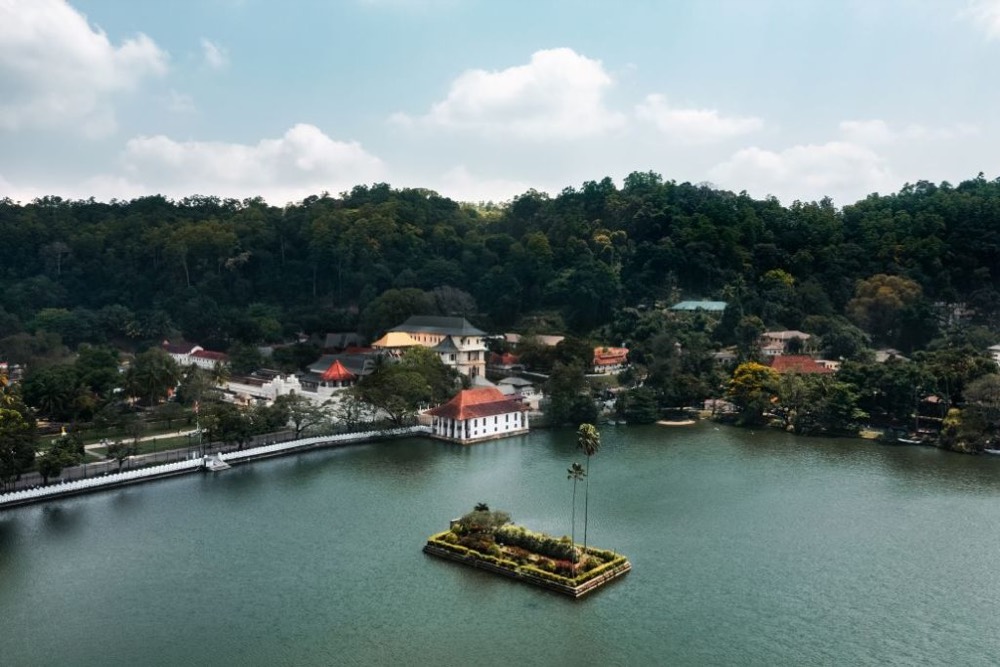
In the evening, visit the Temple of the Sacred Tooth Relic, Sri Lanka’s most revered Buddhist shrine and part of the UNESCO-listed sacred city of Kandy.
The temple enshrines a sacred tooth relic of the Buddha and played a central role in the legitimacy of Sri Lanka’s historic kings. Although it is not a Ramayana location, the visit introduces travellers to the island’s living Buddhist culture and its tradition of religious coexistence.
Overnight stay in Kandy
After breakfast, leave Kandy and travel towards Sri Lanka’s northwestern region.
Visit the Dolukanda mountain and temple area, one of Sri Lanka’s sites associated with Hanuman’s search for the Sanjeevani herb.
When Lakshmana was seriously wounded during the battle, Hanuman was sent to the Himalayas to obtain life-saving medicinal plants. Unable to identify the correct herb, he carried an entire section of the mountain back towards Lanka.
Sri Lankan tradition identifies Dolukanda as one of the places where a fragment of the medicinal mountain fell. The area’s unusual vegetation and traditional medicinal plants have strengthened this belief among devotees.
A full ascent is not included in the normal pilgrimage programme. It requires additional time, physical fitness and a local guide. The standard visit covers the temple and accessible lower section.
Continue to the Chilaw area.
Overnight stay near Chilaw or Negombo
After breakfast, visit two of the most significant post-war Ramayana pilgrimage sites in Sri Lanka.
According to tradition, after defeating Ravana, Rama was troubled by Brahmahathi Dosha—the spiritual consequence of killing Ravana, who was a Brahmin and a great scholar despite his actions.
When Rama reached the Munneswaram area, he felt the affliction temporarily lessen. He prayed to Lord Shiva for guidance and purification. Shiva is believed to have instructed him to install and worship Shiva Lingams at sacred locations.
Munneswaram is an ancient temple complex with shrines dedicated to Shiva, Ganesha, Ayyanayake and other deities. It remains one of Sri Lanka’s most important Hindu pilgrimage centres.
Continue to Manavari, where Rama is believed to have installed and worshipped the first Shiva Lingam following Shiva’s instructions.
The Lingam is revered as Ramalinga Shivan or Ramalingam because it was consecrated by Rama. In Sri Lankan Ramayana tradition, it is considered one of the most sacred Lingams associated with him outside India.
Together, Munneswaram and Manavari represent repentance, purification and the restoration of dharma following the destruction of war.
Continue to Colombo and check in at the hotel.
Overnight stay in Colombo
After breakfast, visit the final sacred locations of the journey.
Visit Sri Anjaneyar Temple in the Colombo area, an important modern shrine dedicated to Lord Hanuman.
The temple provides devotees with an opportunity to offer final prayers to Hanuman, whose courage, humility, wisdom and devotion made Rama’s victory and Sita’s rescue possible. Religious ceremonies may be arranged in advance, subject to temple schedules.
Continue to Kelaniya Raja Maha Vihara, one of Sri Lanka’s most revered Buddhist temples.
According to Sri Lankan Ramayana tradition, after Ravana’s defeat, Rama recognised the righteousness of Ravana’s younger brother Vibhishana and crowned him King of Lanka at Kelaniya. Vibhishana had advised Ravana to release Sita and later supported Rama when Ravana refused to follow the path of dharma.
Vibhishana subsequently became revered as a guardian deity of Sri Lanka. A shrine dedicated to him can be seen within the Kelaniya temple complex.
The present Buddhist temple is also celebrated for its beautiful paintings and its association with the Buddha’s legendary visit to Kelaniya.
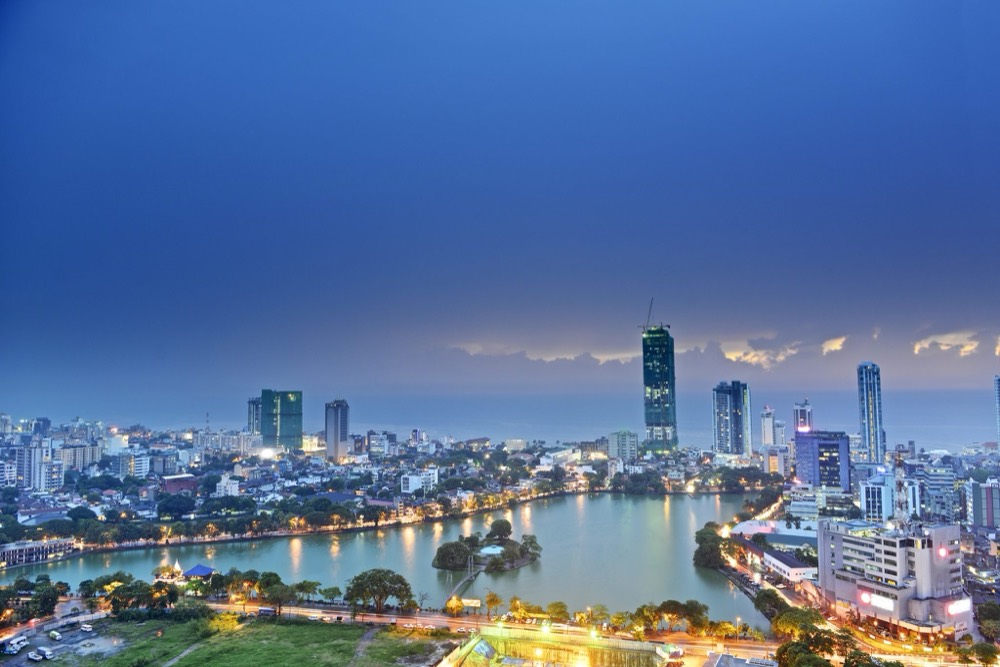
Complete the day with a sightseeing tour of Colombo. Depending on available time, see the Lotus Tower, Independence Square, Old Parliament, Galle Face Green, Gangaramaya Temple and the city’s colonial buildings.
Enjoy free time to purchase Ceylon tea, spices, handicrafts, gems, clothing and religious souvenirs.
Overnight stay in Colombo
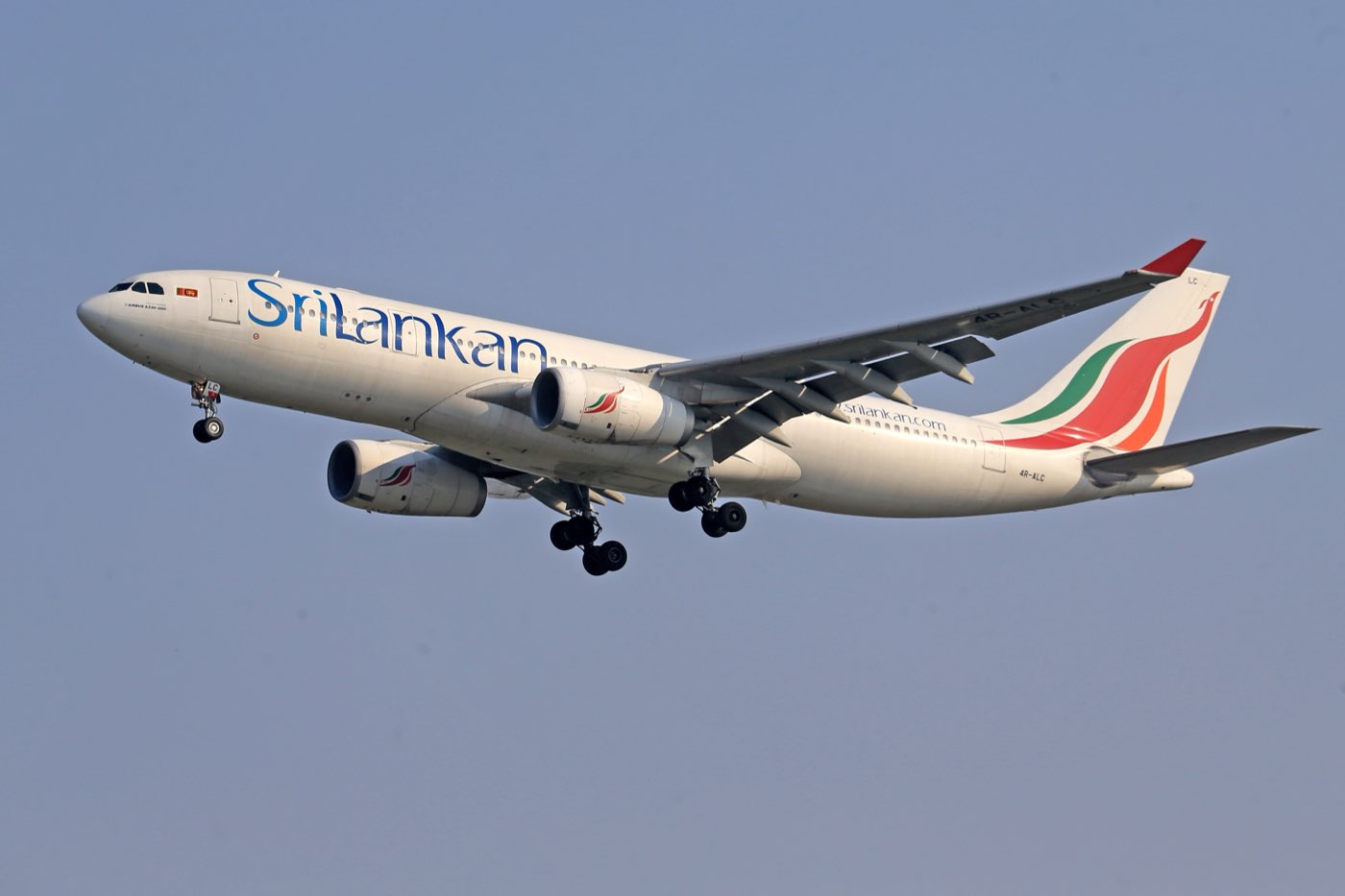
After breakfast, transfer to Bandaranaike International Airport for your departure flight.
Leave Sri Lanka with memories of a pilgrimage that explored not only the familiar Ramayana temples but also the secluded lakes, mountains, forests, caves and ancient sacred landscapes that preserve Sri Lanka’s lesser-known Ramayana traditions.
What Makes This Yatra Different?
Tell us your dates and how you like to travel, and we'll send back a tailored version of this itinerary with a full quote, usually within a day.